Request readiness review
For DOL & FTC Regulated Firms

Is your firm audit-ready — or just hoping no one looks?

DOL and FTC regulators now require documented cybersecurity programs. The question isn't whether they'll check. It's whether you'll be ready.

TPAs, RIAs, financial planners, and plan sponsors that handle retirement plan data or non-public financial information face enforceable obligations under DOL EBSA Cybersecurity Guidance and the FTC Safeguards Rule (GLBA).
This isn't optional. The DOL launched its cybersecurity audit initiative in 2021 and actively cites firms for deficiencies. FTC Safeguards Rule enforcement is ongoing. Gaps found by auditors cost far more to remediate than proactive compliance.
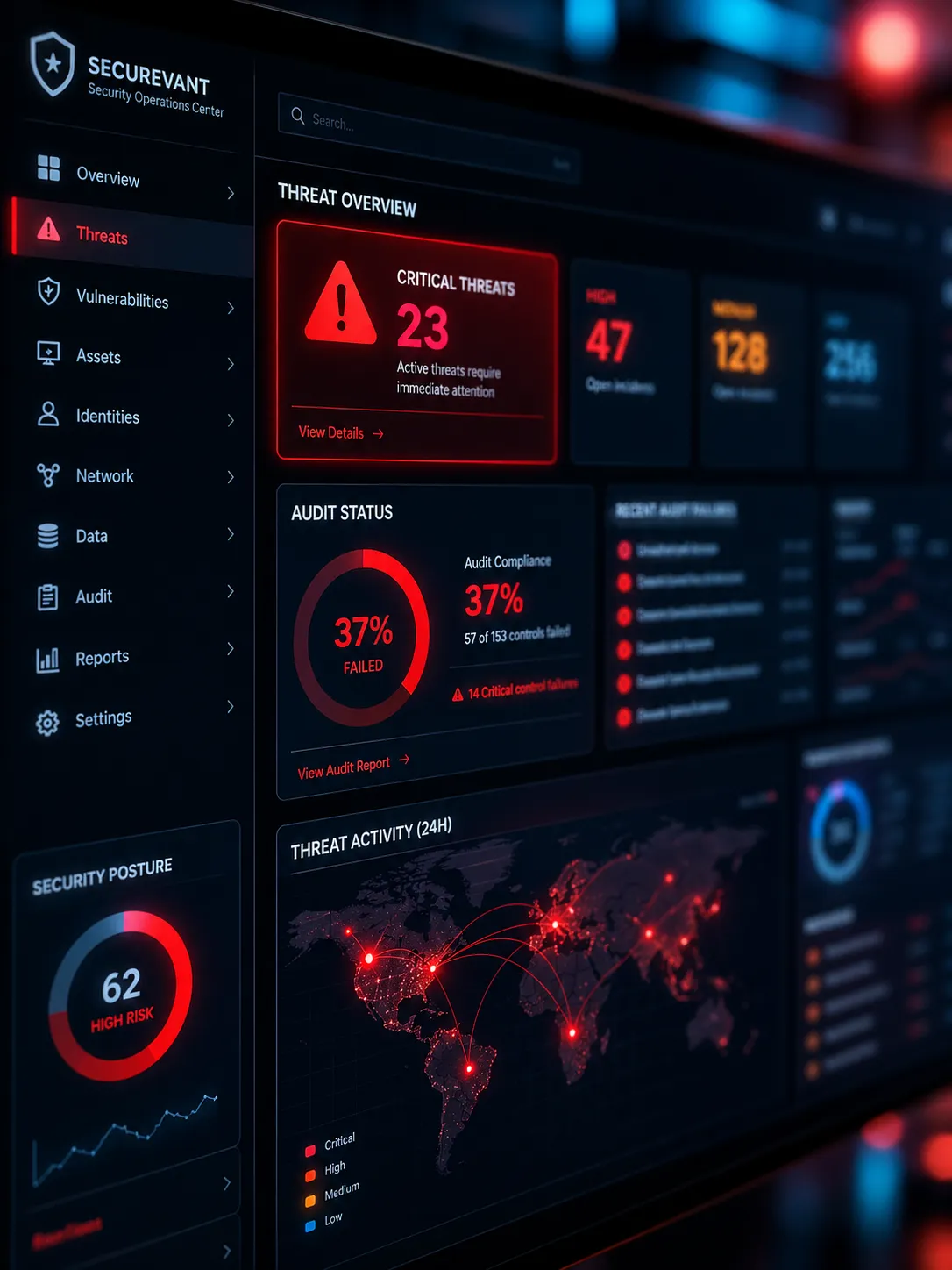
Security operations dashboard showing DOL and FTC audit compliance status for financial firms
TPAs RIAs Plan Sponsors Financial Planners
$4.88M
Average cost of a financial sector data breach
IBM Cost of a Data Breach Report, 2024
$51K+/day
Maximum FTC civil penalty per ongoing GLBA violation
FTC Safeguards Rule, 16 CFR Part 314 (2023 adjusted)
2021
Year DOL EBSA launched its active cybersecurity audit program
DOL EBSA Cybersecurity Guidance, April 2021
95%
Of breaches exploit preventable gaps in policy, access, or training
Verizon Data Breach Investigations Report, 2024
Regulatory Requirement

What Regulators Expect You to Have in Place

These aren't suggestions. DOL EBSA and FTC Safeguards Rule examiners use checklists like this during audits. Gaps are cited as findings — and findings have consequences.

Written security program & designated oversightA current Written Information Security Plan (WISP), documented policies, and a named individual with formal responsibility — not just a job title on a slide.
Annual risk assessments with documented mitigationWritten risk assessment output tracking identified risks and specific remediation steps — updated at least annually and after material changes.
MFA & encryption across all sensitive systemsMulti-factor authentication enforced for every user and system touching client or plan data. Encryption required at rest and in transit — no exceptions.
Continuous monitoring for threats & suspicious activityActive logging and alerting across cloud, M365, endpoints, and third-party systems. "We have tools" is not the same as "we would detect a breach."
Documented & tested incident response planNamed roles, escalation paths, and notification timelines in writing. Must be exercised — a tabletop drill at minimum. An untested IRP is itself a compliance gap.
Annual cybersecurity training for all employeesDocumented completion records required. Covers phishing, social engineering, and handling of non-public financial information — not a generic video with no attestation on file.
Vendor security reviews for all data-access providersEvery vendor touching client data requires a documented security assessment and written agreement. Required under FTC Safeguards Rule — common audit finding when missing.
Tested backup & verified disaster recoveryBackups that have never been restored are not compliance-ready. Recovery must be tested, timed, and documented — with defined RTO and RPO targets an auditor can review.

Common Gaps We Find When We First Engage

Policies on paper, untested

Written policies exist but haven't been reviewed or operationally enforced in 2+ years.

No vendor review process

Third-party tools access client data with no documented security review or contract clause.

MFA gaps on legacy systems

Some staff or legacy systems excluded from MFA — exactly what auditors and attackers look for.

IRP never exercised

A written incident response plan exists but no drill has been conducted and roles are undefined.

Unverified backups

Data is being copied somewhere, but actual restoration has never been tested or timed.

Not sure where your organization stands? We'll walk through this list with you — honestly — in 30 minutes.

Request a complimentary DOL/FTC Readiness Review

What's at stake for regulated firms

The consequences of non-compliance fall into three distinct categories — and they compound each other.

Regulatory & Legal

DOL Audit Findings & ERISA Liability

DOL EBSA audits can result in formal findings, required corrective action plans, and ERISA liability — including fiduciary breach claims against plan administrators who failed to protect participant data.

Financial & Operational

FTC Enforcement & Civil Penalties

FTC Safeguards Rule violations under GLBA carry civil penalties up to $51,744 per violation per day. A breach affecting hundreds of client records can produce multi-million dollar exposure before remediation costs begin.

Reputational & Commercial

Client Contract Loss & Trust Damage

Plan sponsors and institutional clients increasingly require documented cybersecurity programs as a condition of engagement. A breach or audit finding can trigger contract termination clauses.
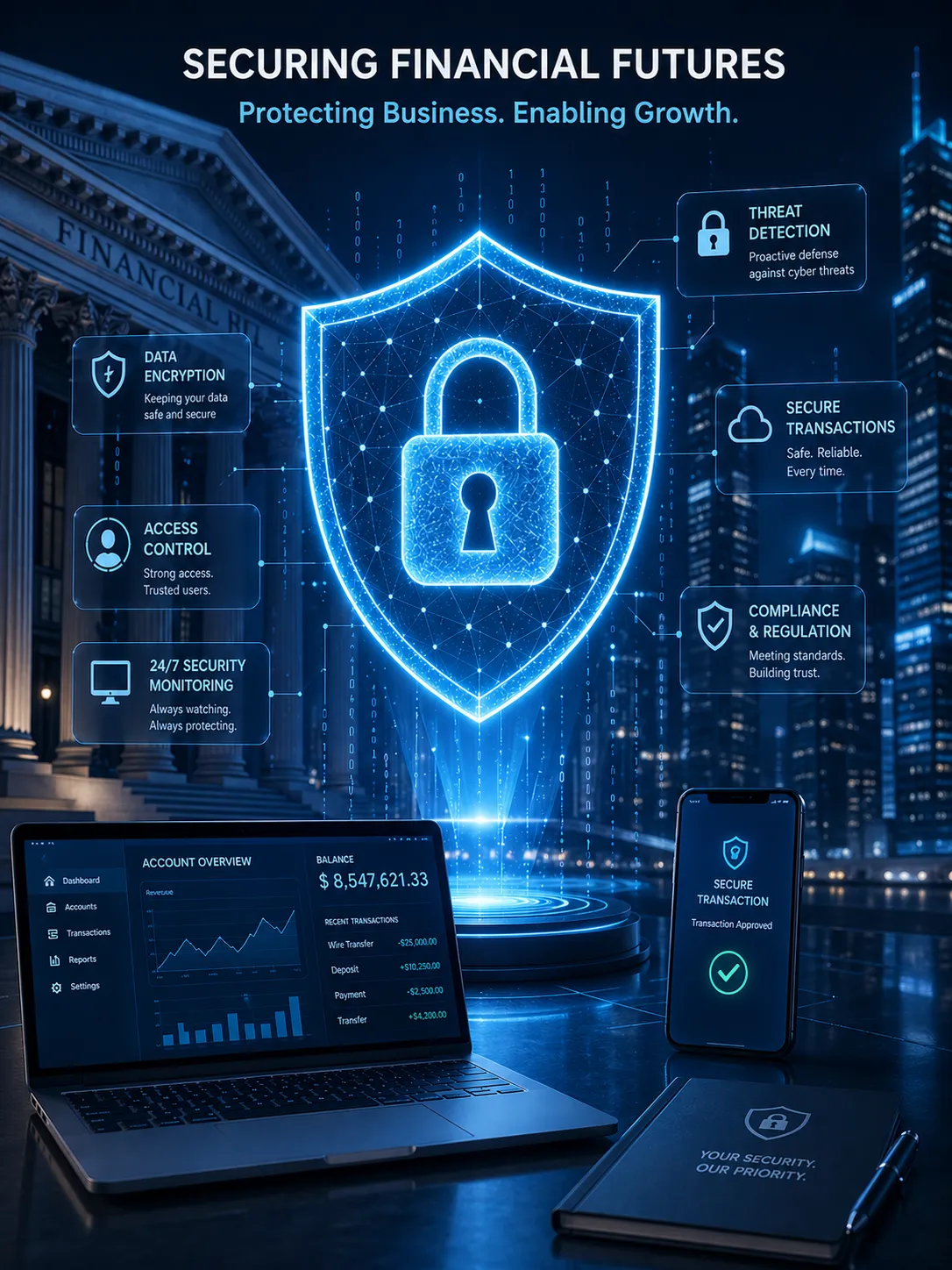
Philotech security operations center supporting DOL and FTC compliance for financial firms

How Philotech Closes the Gaps

We specialize in helping TPAs, RIAs, and regulated financial firms build practical, documented programs — not just checkbox compliance.

Compliance & Governance

Documented policies, WISP creation, identity management (M365), and audit-ready controls mapped directly to FTC Safeguards Rule and DOL EBSA requirements.

Business Continuity

Tested backups, verified recovery procedures, rapid failover, and structured incident response — so client data stays protected and you can demonstrate it to auditors.

Integrated SOC (Security Operations Center)

24/7 monitoring, detection, and response across PC and cloud environments — closing the gap between "we have tools" and "we would actually detect a breach."

Designed for firms that face real audits. Governance mapped to FTC Safeguards Rule and DOL EBSA requirements — backed by resilient infrastructure, verified recovery, and enterprise-grade IT operations.

Why regulated firms choose Philotech

Built for the realities of DOL and FTC oversight — practical programs that hold up under examiner scrutiny, not just internal review.

Regulatory Alignment by Design

Controls and documentation structured specifically around DOL EBSA Cybersecurity Guidance (2021) and FTC Safeguards Rule — the frameworks actively cited in financial services enforcement actions.

Practical, Not Theoretical

Programs sized for TPAs, RIAs, and mid-market financial firms — not enterprise-scale frameworks that overwhelm lean teams. Every control is something your staff can operate and your auditors can verify.

Documented, Tested, Verifiable

Every policy, backup, incident response plan, and risk assessment we deliver is tested and documented — because "we have it somewhere" is not an answer that satisfies DOL or FTC examiners.

TPA Benchmark logo — Philotech is TPA Benchmark's designated IT provider for regulated financial firms

Philotech is TPA Benchmark's designated IT provider, delivering cybersecurity, compliance, and managed IT services built for regulated financial firms — including RIAs, broker-dealers, third-party administrators, financial planners, insurance firms, and family offices.

CEFEX Centre for Fiduciary Excellence logo — Philotech is CEFEX-assessed for cybersecurity best practices

Philotech's practices are CEFEX-assessed against industry cybersecurity best practices — independent verification that our governance framework is real and operational, not aspirational.

Complimentary · 30 minutes · No obligation

Schedule a complimentary DOL/FTC Readiness Review

In 30 minutes we'll review your governance posture, identify your highest-priority gaps, and outline what closing them looks like for a firm your size.

  • Posture check against all 8 DOL/FTC requirements — with honest gap assessment
  • Continuity & recovery readiness — backup verification and RTO/RPO review
  • Detection & response capability check — not just whether you have tools
  • Prioritized action roadmap specific to your firm — no sales pitch, no obligation
(279) 895-6316 info@philotech.io
10301 Placer Lane, Sacramento, CA 95827
Philotech logo
© Philotech · Protecting businesses. Enabling growth.
References DOL EBSA Cybersecurity Guidance (April 2021) and FTC Safeguards Rule (16 CFR Part 314) under GLBA. Metrics sourced from IBM Cost of a Data Breach Report 2024 and Verizon DBIR 2024. FTC penalty figure reflects 2023 inflation-adjusted maximum. Not legal advice.